Your Cart
Your Cart is currently empty.



At first glance, the difference may seem small. A beautiful grain, a warm colour, a minimalist shape – a piece of furniture made of veneer and one made of solid wood can look very similar. But if you ask: Are they the same? – the answer is: No.
Solid wood is an authentic, durable and living material. Veneer is just a visual copy of it – a thin layer of wood glued to a furniture panel. It can look good, often even better than solid wood – wide “planks”, beautiful grain, no knots. But in the long run, it’s worth opting for solid wood – veneer can crack, it can dent, especially if it’s made on an inferior board, and it can’t be refinished.
At Szyszka Design we work exclusively with solid wood – because we believe that it has a value that cannot be falsified.
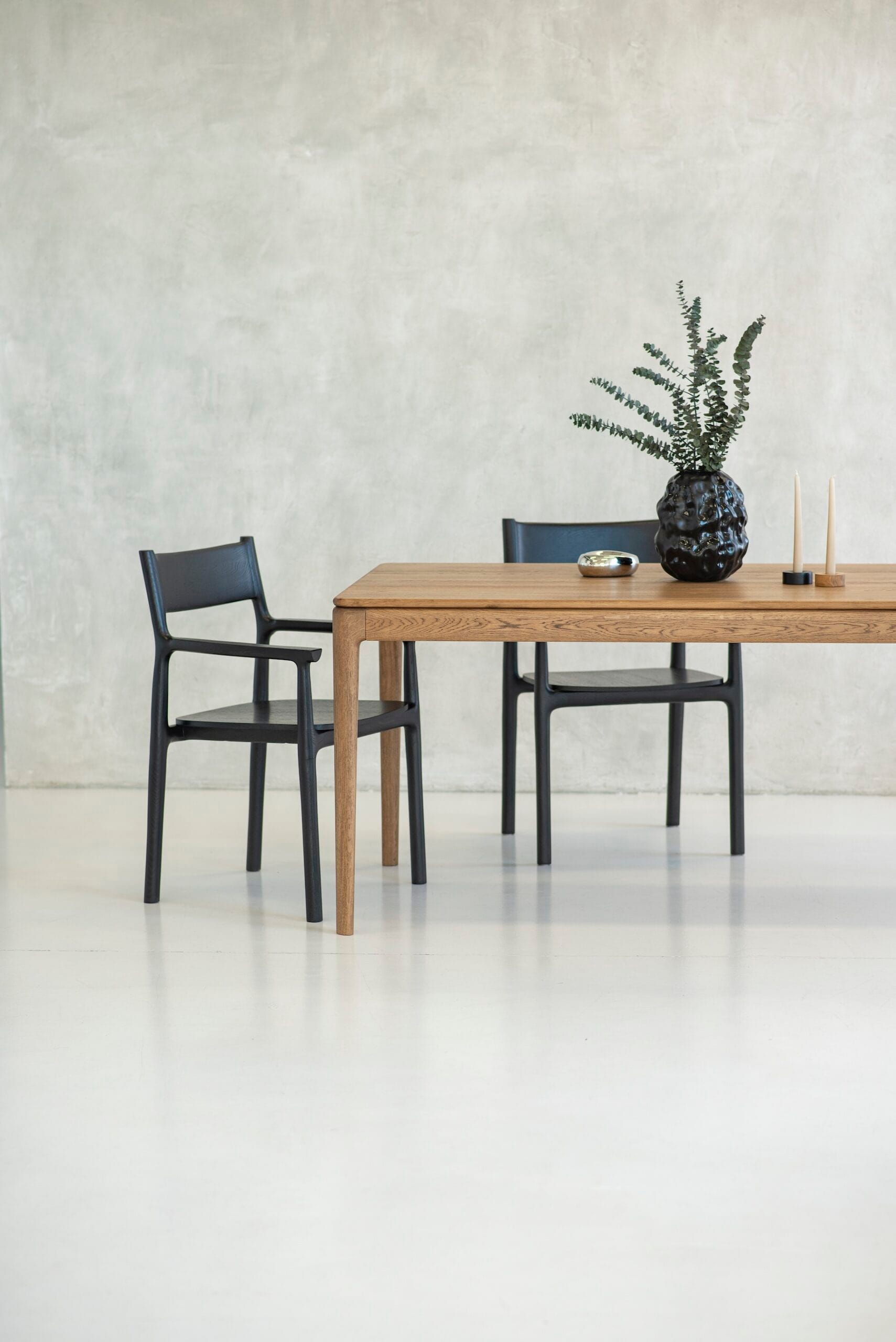
See the solid wood table collection
Veneer:
Solid wood:
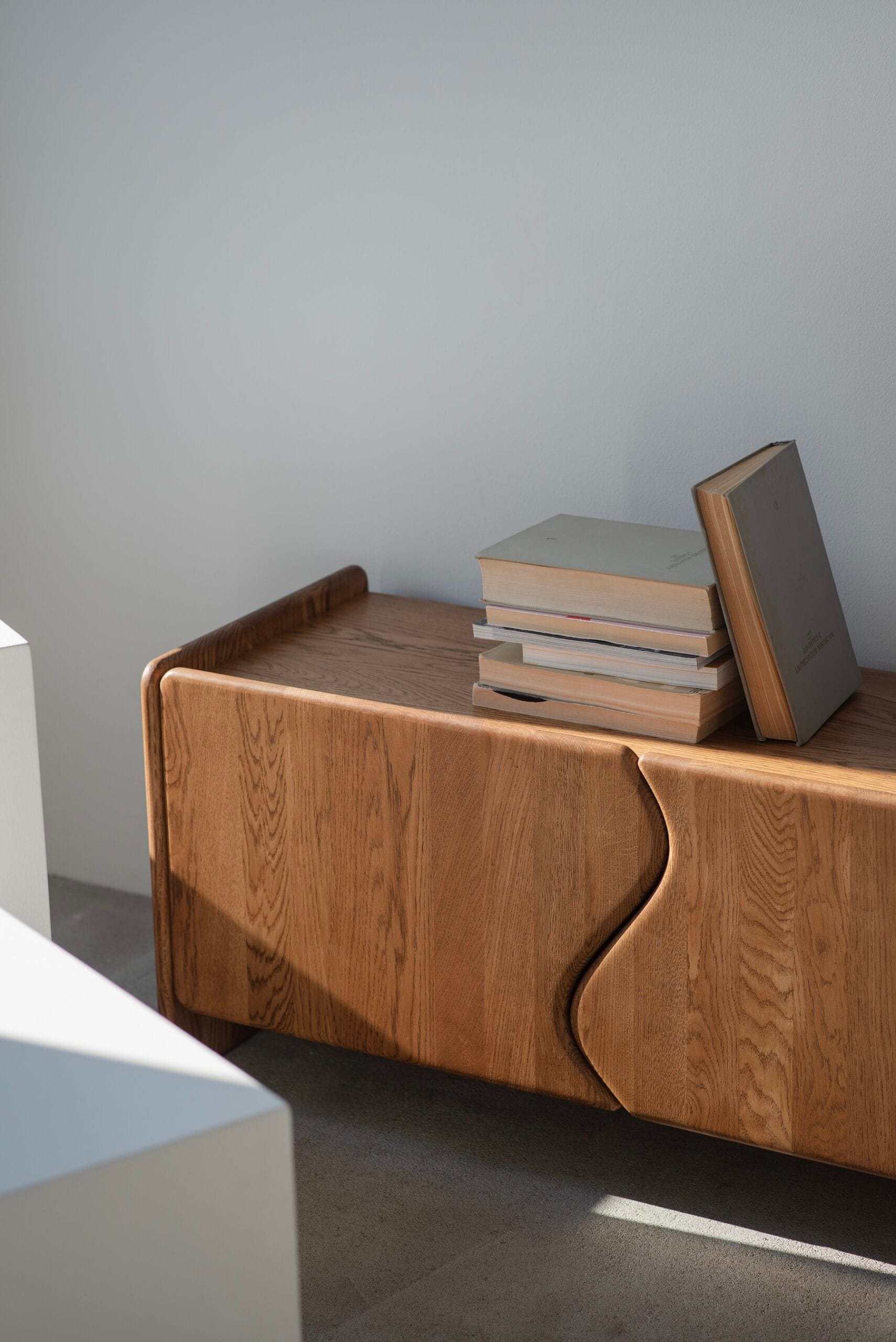
👉 Get to know the Lino RTV wardrobe – made of solid wood, unmistakable.
The easiest way is to look at the edges of the furniture:
It is often the edges that reveal what we are dealing with – it is worth taking a closer look at them.
Cross-laminated worktops are becoming increasingly popular as they offer better dimensional stability and reduce the risk of cracks caused by woodworking. This is a good solution – provided the entire core is made of solid wood.
Care should be taken with products where the inside of the top (i.e. the layers underneath the top) is made of furniture board or cheap wood species such as pine. Such a construction significantly reduces the durability of the furniture – even though it may look elegant from the outside, there is a greater risk of surface damage due to the soft core.
At Szyszka Design, we manufacture furniture exclusively from solid wood, thus combining the stability of the construction with the authenticity of the material.
Because a piece of furniture made of solid wood is not just an aesthetic decision. It is a decision:
If you want quality, experience and genuine material presence, solid wood is unrivalled.